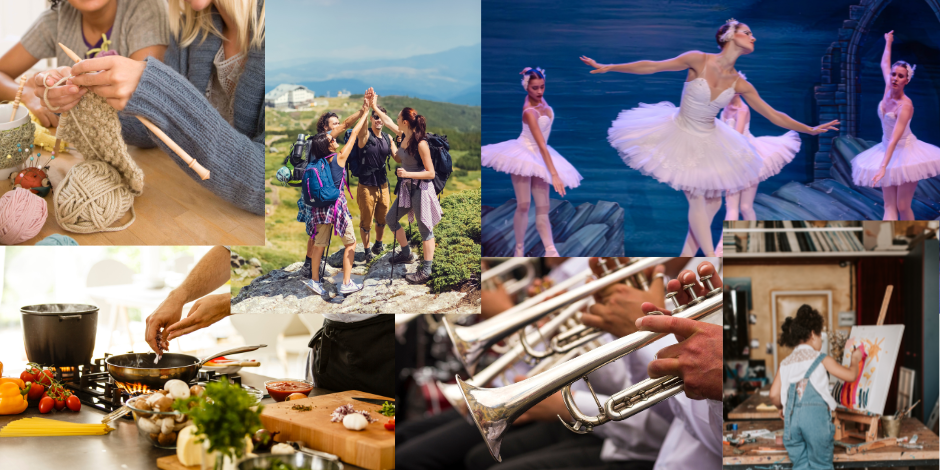
Sign up for Dr. Sarah Nelson’s class series, “A 12-Week Journey Through The Artist’s Way”.
For as long as humans have existed, we have been defined by our creativity: making tools, weaving stories, painting caves, dreaming of what is yet to come. The evolutionary expansion of the frontal lobe, the area of the brain involved in planning, imagination, and abstract reasoning, distinguished us Homo sapiens from our earlier human ancestors. The Latin word sapiens means “wise,” “discerning,” or “knowing”, reflecting some of our core human attributes that provide us with an innate capacity to create.
In recent years, research has increasingly explored the importance of creative expression for mental and cognitive health. Engaging in art-making, writing, music, or craft activities has been shown to support emotional regulation, cognitive flexibility, and social connection, all of which largely contribute to your mental health and well-being.(1) In addition, creative engagement has been linked to improved cognitive health in aging, helping preserve memory, attention, and problem-solving abilities while reducing the risk of cognitive decline.(2)
Finding Your Flow
One of the proposed mechanisms for creativity’s positive effects on cognitive and mental health is the activation of certain neural networks in the brain. One of which induces a “flow state”, defined by neuroscientists as a place where deep focus and optimal performance occurs, while the perception of time often fades away. Being in a flow state is negatively correlated with anxiety and positively correlated with increased self-esteem.(3) That is to say, for patients navigating stress, anxiety, or low self-esteem, regularly finding a state of “flow” through a creative pursuit may provide meaningful, therapeutic change.
Some of the other ways creativity impacts the brain:
- Feel good naturally: Play and creative activities stimulate the brain’s reward system, releasing neurotransmitters like dopamine that increase motivation, attention, and enjoyment.(4)
- Stay flexible: Engaging in creative activities improves cognitive flexibility, helping you think creatively, adapt to new situations, and support neural plasticity (brain growth and reorganization).(5)
- Connect with others: Creative activities provide an opportunity for social connection, which strengthens relationships and helps protect against depression.(6) Building social connections boosts oxytocin, the hormone that fosters bonding and trust, and helps lower cortisol and stress levels social connection impacts oxytocin release, a hormone in bonding and trust, as well as cortisol reduction and lowered stress levels.
A Season for Creation
As the days grow shorter and winter sets in, I invite you to turn inward and make space for reflection and creation, in whatever form calls to you. Whether it’s picking up the guitar again (or for the first time!), experimenting with recipes in the kitchen, journaling your thoughts, sketching, dancing, or trying out some other craft you’ve always been curious about, what matters most is giving yourself permission to create. If you’d like support along the way, read more about our upcoming class for starting the new year off by nurturing and reconnecting with your creative self.
Reignite Your Creative Spark: A 12-Week Journey Through The Artist’s Way
Join a supportive, weekly accountability group as we move through Julia Cameron’s The Artist’s Way—a 12-week journey to nurture your creative self. Whether you’re an artist, a seeker, or simply looking to reconnect with your inner voice, this group offers structure, community, and inspiration. Together, we’ll explore the connection between creativity and well-being, and support each other in showing up for the practices that reignite joy, purpose, and play in our lives
Meet Dr. Nelson
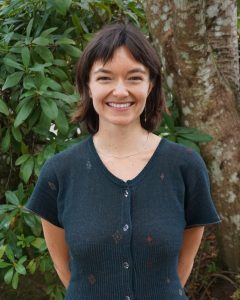 Sarah Nelson is a naturopathic doctor dedicated to the science and art of healing, as well treating the whole you. She works closely with the mind-body connection, and believes the most effective treatments include the integration of her patients’ physical, mental, and spiritual well-being. Her approach is both curious and nonjudgmental in nature.
To schedule an appointment with Dr. Nelson, call 503-956-9396 or contact us now to schedule an appointment today.
References
- Jean-Berluche D. Creative expression and mental health. J Creativity. 2024;34(2):100083. Elsevier. Directory of Open Access Journals+1
- Fioranelli M, Roccia MG, Garo ML. The role of arts engagement in reducing cognitive decline and improving quality of life in healthy older people: a systematic review. Front Psychol. 2023;14:1232357. doi:10.3389/fpsyg.2023.1232357.
- Mao Y, Yang R, Bonaiuto M, Ma J, Harmat L. Can Flow Alleviate Anxiety? The Roles of Academic Self-Efficacy and Self-Esteem in Building Psychological Sustainability and Resilience. Sustainability. 2020; 12(7):2987. https://doi.org/10.3390/su12072987
- Chermahini SA, Hommel B. The (b)link between creativity and dopamine: Spontaneous creativity and dopamine. Cogn Brain Res. 2010;53(4):213‑221. doi:10.1016/j.cogbrainres.2010.06.014
- Orwig W, et al. Creativity at rest: Exploring functional network connectivity of creative experts. PMC. 2023. https://www.ncbi.nlm.nih.gov/pmc/articles/PMC10473280/. Accessed November 12, 2025.
- Achterberg EJM, et al. The neurobiology of social play behaviour: Past, present and future. Neurosci Biobehav Rev. 2023;142:105027. doi:10.1016/j.neubiorev.2022.105027