Big Breakfast, Better Ovulation?
Polycystic ovary syndrome (PCOS) is closely linked to insulin resistance and elevated androgens, two key factors that can disrupt ovulation. Interestingly, research suggests that when you eat may matter just as much as what you eat when addressing these underlying features.
One landmark study published in Clinical Science explored how meal timing impacts hormonal and metabolic health in women with PCOS. The study included 60 lean women with PCOS, all of whom
consumed the same total number of calories (about 1,800 per day) for 90 days.
Participants were randomized into two groups:
- High-Calorie Breakfast Group:
980 kcal at breakfast, 640 kcal at lunch, 190 kcal at dinner - High-Calorie Dinner Group:
190 kcal at breakfast, 640 kcal at lunch, 980 kcal at dinner
Importantly, total daily calories were identical. The only difference was meal timing.
The Results
The women who consumed the majority of their calories at breakfast experienced significant hormonal and metabolic improvements showing: improved insulin sensitivity, a 50% decrease in free testosterone,
a 105% increase in sex hormone-binding globulin (SHBG), and a 39% reduction in stimulated 17α-hydroxyprogesterone.
These changes reflect reduced ovarian androgen production and improved blood sugar regulation, two central challenges in PCOS. Even more notably, the high-calorie breakfast group experienced increased
ovulation rates, while the dinner-heavy group showed no improvement.
Why Would Breakfast Size Matter?
PCOS is strongly influenced by chronically elevated insulin levels. High insulin stimulates the ovaries to produce more androgens, which can interfere with ovulation.
The proposed mechanism looks like this: Larger morning meal → Improved insulin sensitivity → Lower overall insulin levels → Reduced ovarian androgen production → Improved hormonal balance → Ovulation resumes
Insulin sensitivity is naturally higher in the morning, , front-loading calories may therefore align more closely with our metabolic biology.
What This Looks Like in Practice
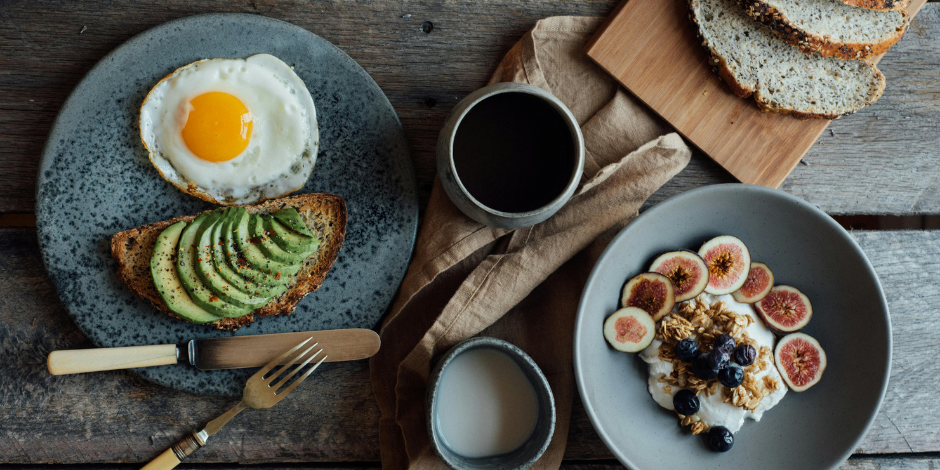
For women struggling with PCOS, I often recommend making breakfast the most substantial meal of the day, with a strong emphasis on protein. Prioritizing protein in the morning helps stabilize blood sugar, reduce cravings, and support sustained energy.
Here are a few high-protein breakfast ideas to consider:
- Veggie omelet + avocado + organic breakfast sausage: 2–3 eggs cooked with spinach, mushrooms, peppers, and onions, served with sliced avocado for healthy fats.
- Cottage cheese bowl: Cottage cheese with cucumbers, tomatoes, olive oil, and everything bagel seasoning (savory), or berries and walnuts (sweet).
- Protein oatmeal: Oats cooked with chia seeds and stirred with protein powder or collagen peptides; topped with nut butter, cinnamon, and sliced apples or berries for added fiber.
If you’re struggling with PCOS or want guidance on incorporating blood sugar balancing habits into your daily routine, personalized support can make a difference. Strategic shifts in meal timing, food composition, stress management, and movement can collectively improve insulin sensitivity and hormonal health over time. Feel free to schedule an appointment today.
Meet the Author
 Sarah Nelson is a naturopathic doctor dedicated to the science and art of healing, as well treating the whole you. She works closely with the mind-body connection, and believes the most effective treatments include the integration of her patients’ physical, mental, and spiritual well-being. Her approach is both curious and nonjudgmental in nature.
To schedule an appointment with Dr. Nelson, call 503-956-9396 or contact us now to schedule an appointment today.
References
- Jakubowicz, D., Barnea, M., Wainstein, J., & Froy, O. (2013). Effects of caloric intake timing on insulin resistance and hyperandrogenism in lean women with polycystic ovary syndrome. Clinical Science (London), 125(9), 423–432. DOI: 10.1042/CS20130071
- Song, X., Wang, H., Su, C., Wang, Z., Huang, F., Zhang, J., Du, W., Jia, X., Jiang, H., Ouyang, Y., Wang, Y., Li, L., Ding, G., & Zhang, B. (2021). Association of Time-of-Day Energy Intake Patterns
with Nutrient Intakes, Diet Quality, and Insulin Resistance. Nutrients, 13(3), 725. https://doi.org/10.3390/nu13030725