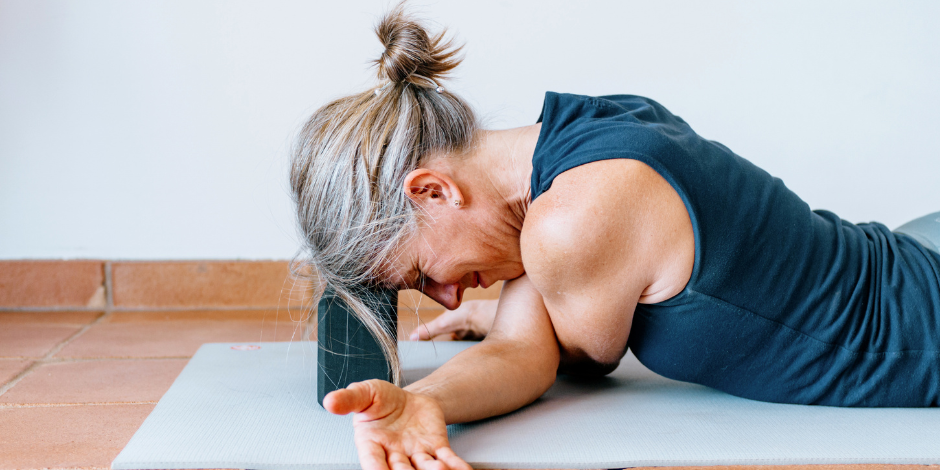
What is Yin Yoga?
Yin yoga is a slow form of practice that includes passive stretches on the mat that are held for 3-5 minutes. These poses release tension, stretch the muscles and connective tissues, and provide emotional release. The health benefits of yin yoga include nervous system reset and regulation. This can assist with symptoms related to anxiety and insomnia, and can counter the negative effects of stress on the mind and body. While holding a passive stretch for a few minutes sounds simple enough, our modern brains and habits can make this a challenge, as we may start looking for something “to do.” This type of yoga is a powerful practice for retraining our overstimulated and overactive bodies and nervous systems, and bringing us back into simple presence.
The Mechanics of the Practice
Whenever we place the body into a particular shape of a yoga pose and hold it for at least 3 to 5 minutes, we are providing our nervous system with a stimulus. In the target areas of each pose, our soft tissues and joints are subjected to either a tensile stress (i.e. stretch) or compression (i.e. pressure). The stimuli will be detected by the sensory nerves surrounding these tissues. Then, nerve signals will be relayed to the spinal cord and brain for processing.
The time frame of the long held pose gives the nervous system an opportunity to process all the sensory stimuli to form and refine new connections. During the hold, students are encouraged to stay connected with breath and the sensations coming up without fidgeting. When one has difficulty with staying still and quiet, it is an opportunity to take on the role of objective observer of one’s own mind and conditioned behaviors. We may begin to notice how busy we are even when still and quiet!
Yin and Fascia
During these longer held poses, students experience fascial release. Fascia is a layer of connective tissue below the skin. It surrounds every part of your body, and provides shape and support. For example, fascia holds your muscles together, and allows them to contract and stretch. Just like tendons and ligaments, fascia is made mostly of collagen. Fascia also connects to the lymphatic system, and when not healthy, can restrict lymph flow.
Fascia plays a role in how we experience pain. When stressed or traumatized, fascia can tighten, restricting mobility and causing discomfort. Fascial research shows that gentle, sustained stretching, such as in a Yin yoga practice, can restore hydration and elasticity to fascia. This in turn can improve movement and reduce pain.
Yin practice is designed to release stuck emotional and mental energy and tight muscles, parts of us that have been in protective mode for too long. We store energy and emotions in our bodies. Western medicine used to believe that our thoughts, feelings and emotions were separate from our physical bodies. But it’s now more widely accepted that there’s a connection between the mind and the body. In eastern medicine traditions, it is said that unprocessed trauma lives in our fascia, which can cause tension, rigidity, and pain. This is where the mind-body connection, an essential piece of Yogic philosophy, comes into play.
Yin and Stress Reduction
Multiple studies have found that having a regular yin yoga practice can have a significant impact on lowering stress and reducing the risk of depression. This is because the practice of yoga activates the parasympathetic nervous system, which calms the body and slows heart rate. The parasympathetic nervous system is responsible for energy recovery, regeneration, repair, relaxation, and rejuvenation. Whereas the sympathetic nervous system is responsible for responding to dangerous or stressful situations. This includes the fight or flight responses, as well as many automatic body processes, such as heart rate, blood pressure, and digestion.
Because our modern world has become so busy, chaotic, and stressful, the sympathetic nervous system is often over worked. We may need to bring in alternative practices to balance out our parasympathetic nervous system response. Prolonged or chronic stress can lead to serious health problems. Yoga, especially a slow practice like yin yoga, is perfectly designed for this. It can bypass our habitual responses and thinking, and go straight to rest and relaxation. Over time with consistent practice, this brain state will become easier and easier to return to.
Yin poses
The yin yoga practice is all mat based, and slow. You won’t find a fast standing flow sequence here. Practitioners can decide if they want to use props such as blocks and bolsters to support the poses. The following is a short list of some common and powerful yin poses:
- Butterfly– seated with soles of the feet together, knees bent, fold over
- Sphinx– from the belly, on elbows and forearms, gentle backbend with gaze forward Child’s- Fold over, knees bent and wide, forehead to floor, arms outstretched Lizard- hip opener lunge with hands down on ground, foot outside the hand Pigeon- deep hip opener on front of body, belly down, one leg extends behind Supine twist- from the back, bend a knee, bring it across the body, “T” the arms out
- Wide leg foldover– seated deep straddle stretch, fold over
- Corpse– laying flat on back, or supported with bolster behind the spine
- Crocodile– laying belly down, stack hands, forehead to hands
Health Benefits of a Yin Practice
There are multiple reported physical and mental health benefits of a yin practice. The long held stretches lengthen fascia, which enable more ease of movement, increase flexibility, and can lessen pain. By breathing into each pose, more oxygen is brought into the body and muscles. This increases blood flow and circulation, bringing us into the present moment. The nervous system benefits allow stress reduction, and a chance to practice mindfulness. Overall, this practice can bring multiple benefits into one’s health and wellness journey.
About the Author
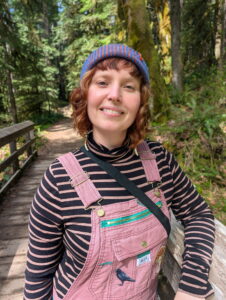 Heather Day-Melgar is an instructor of yogic based mindful movement, with a focus on grounding stillness and presence, accessibility, nervous system care, strength, and stability. She began a dedicated yoga practice in 2015, completed a 200-hour certification in 2017, and has consistently continued to build expertise through workshops, study, and a solid personal practice. Her goal is to help students feel liberated and joyful in their movements, building a new understanding and relationship to their bodies.
She teaches a Yin yoga class every Saturday at 10:00am. Sign up here!