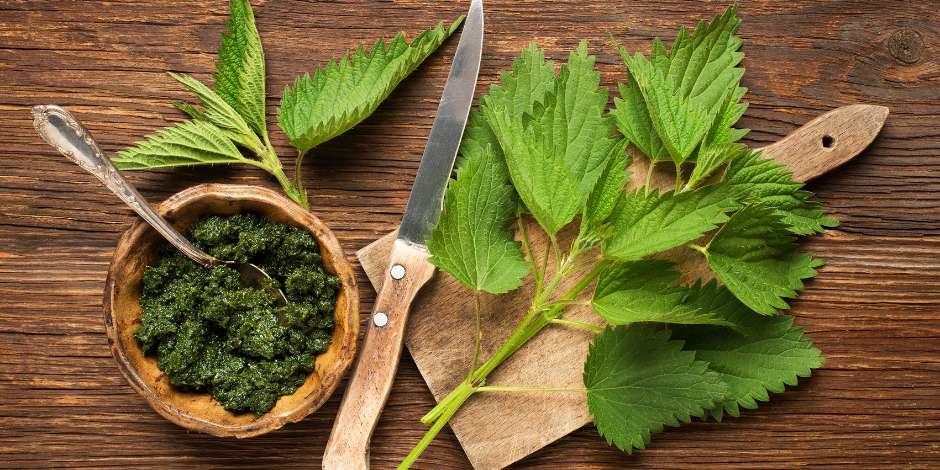
Nettle as a Spring Tonic: Nourishment, Renewal, and Herbal Tradition
As winter fades and spring emerges, many traditional healing systems turn toward gentle detoxification and nourishment. One of the most revered plants for this seasonal transition is nettle (Urtica dioica), a humble yet powerful herb long valued as a restorative spring tonic. Keep reading for the benefits of nettle during spring.
Meet Nettle: A Resilient, Nourishing Plant
Nettle is a hardy, herbaceous plant that thrives in disturbed soils and is commonly found near human settlements across North America, Europe, Asia, and North Africa. Recognizable by its serrated leaves and fine stinging hairs, nettle has a reputation for its prickly touch, but beneath that sting lies deep nourishment!
When dried or cooked, nettle loses its sting and becomes a mineral-rich food and medicine. In fact, it can be prepared much like spinach, offering a simple and accessible way to incorporate herbal support into daily meals.
Why Nettle for Spring?
Spring is a time of renewal, and nettle aligns perfectly with this seasonal shift. Traditionally used as a spring tonic, nettle helps:
- Strengthen mucous membranes (respiratory, digestive, and urinary systems)
- Support gentle detoxification through its diuretic action
- Replenish nutrients after winter depletion
- Reduce excess fluid retention and stagnation
Its astringent and tonifying qualities make it especially helpful for conditions involving excess discharge, mild edema, or general sluggishness in the body.
A Nutritional Powerhouse
Nettle is exceptionally rich in vitamins and minerals, making it ideal for rebuilding and nourishing the body. It contains:
- Vitamins A and C
- Iron, calcium, magnesium, and potassium
- Chlorophyll and dietary fiber
- Flavonoids such as quercetin and kaempferol
Because of this, nettle is often recommended for individuals experiencing fatigue, nutrient deficiencies, or general malnourishment.
Traditional and Modern Uses
Historically, nettle has been used both as food and medicine. During times of scarcity, such as the Irish Great Famine, it served as a vital source of nutrition. Traditional dishes like nettle soups and porridges highlight its role as food as medicine.
Today, herbalists continue to use the benefits of nettle for a wide range of concerns, including:
- Allergies and sinus congestion
- Joint discomfort and inflammation
- Skin conditions like eczema and psoriasis
- Urinary health and fluid balance
- Hormonal support and menstrual concerns
Nettle root, in particular, has been widely studied for supporting prostate health, especially in cases of benign prostatic hyperplasia (BPH).
Energetics: Building and Moving
From an energetic perspective, nettle is both drying and stimulating, helping to clear excess while simultaneously rebuilding. It is often used for individuals who need:
- Increased vitality and resilience
- Support in building blood and tissue
- A sense of grounding and empowerment
Incorporating the Benefits of Nettle Into Your Routine
One of the most beautiful aspects of nettle is its versatility. It can be used as both food and medicine.
Nettle Soup for Spring Nourishment
A warming, mineral-rich soup made with fresh nettle leaves, garlic, onions, potatoes, and lemon offers a deeply nourishing meal. The addition of vitamin C-rich lemon enhances iron absorption, making this an excellent tonic for rebuilding energy.
Ingredients
- 1 basket (or large handful) of fresh nettle leaves (wear gloves when handling fresh nettles)
- 2 cloves of garlic (minced)
- 2 large onions (chopped)
- 2 cups of corn (fresh, frozen, or canned)
- 4 medium to large potatoes (peeled and chopped)
- 3 tablespoons of olive oil
- Salt and black pepper to taste
- Juice of 1 lemon
- 8–10 cups of water or chicken broth
Instructions
- Prepare the nettles:
Rinse well and remove any tough stems. (Cooking removes the sting.) - Sauté the base:
In a large pot, heat olive oil over medium heat. Add onions and garlic, and cook until soft and fragrant (about 5–7 minutes). - Add vegetables:
Stir in potatoes and corn, then pour in the water. - Simmer:
Bring to a boil, then reduce heat and simmer for about 15–20 minutes, until the potatoes are tender. - Add nettles:
Stir in the nettle leaves and cook for another 5–10 minutes until wilted and soft. - Finish the soup:
Add lemon juice, salt, and pepper to taste. You can blend the soup for a smoother texture.
A Seasonal Invitation
Working with nettle invites us to reconnect with seasonal rhythms and the land around us. Harvesting, preparing, and consuming this plant fresh in the spring offers not only physical nourishment but also a deeper appreciation for nature’s cycles.
In a world where supplements often come packaged and disconnected from their origins, nettle reminds us of a simpler truth: healing can begin with what grows right at our feet.
Meet Dr. Nelson
 Sarah Nelson is a naturopathic doctor dedicated to the science and art of healing, as well treating the whole you. She works closely with the mind-body connection, and believes the most effective treatments include the integration of her patients’ physical, mental, and spiritual well-being. Her approach is both curious and nonjudgmental in nature.
To schedule an appointment with Dr. Nelson, call 503-956-9396 or contact us now to schedule an appointment today.