
Cultivating A Healthy Sex Life
Healthy connection with someone else begins with a healthy connection to yourself. Masturbation is one component of a healthy sexual life. Though not necessary, it functions as a means to satisfy arousal, cultivate self-acceptance, and expand one’s personal knowledge of their anatomy and touch preferences. No matter your relationship, masturbation can foster a compassionate and loving self-relationship.
When connecting with another, whether in new or established connection, consent is always required. Consent is a form of permission granted only between mature adults who have informed knowledge of a situation and its potential consequences. Always start with listening to your own inner, “yes” and “no” and practice communicating this to your partner. Consent is recurrent and ongoing; at any moment your consent can change from a “yes” to a “no.”
Why Your Body May Be Saying “No”
If your body is saying “no” to sex, there may be many reasons why.
- Low Libido
- Trauma/Abuse History
- Stress
- Relationship satisfaction
- Repression of sexual or gender identity
Though low libido can be caused by a medical issue and should be clinically evaluated by a professional, it is also profoundly influenced by our sense of personal well-being, our physical health, our hormones, stress levels, and our relationship happiness.
In Chinese medicine, emotional accumulations are often considered when investigating the cause of libido changes. Shame and guilt are heavy and descending emotions. Anxiety holds energy upwards while fear pulls inward and downward. All of these emotions have the potential to restrict or obstruct the natural lifting of arousal. If abuse or trauma is part of your history, it is especially important to seek support with your provider or therapist around these potentially challenging emotions.
Why is Sex Important for Health?
Sex is more than just an act of reproduction. Though it involves the body, sexual health is a form of creative self-expression either with ourselves or our most intimate partners. It is a practice of learning to feel at home in our bodies and comfortable with a broad spectrum of sensations. Our bodies have the ability to feel both pain and pleasure. While pain is an experiencing of a tightening or closing off, pleasure is one of opening and allowing.
Sex may not be a need for everyone, such as those that identify as asexual, but we all seek out experiences of pleasure through food, sex, substances, or experiences. If we are able to diversify our outlets for pleasure, then we are more likely to find a well-rounded balance/moderation for those that we choose to engage in. For many, sexual needs and desires can be suppressed urges secondary to being socialized with restrictive beliefs or in incongruence with ones true sexual identity. For others, excess sexual desires can distract from a true need for deep interpersonal connection.
“The more comfort and trust we have in our bodies, the more choice we have about our sexual actions and interactions…perhaps nowhere more than in intimate communication with another do we need to know our bodies are with us, supporting our needs, and rejecting what is not needed or appropriate. The modulation of flow between being open and being closed is the pulsing life of healthy sexuality.” -Andrea Olsen, Qigong practitioner and author
Our self-care has physical, cognitive, and spiritual components. Just as our hygiene practices, exercise, food and water intake, reflection on our beliefs and habits contribute to a healthy lifestyle, so too does our engagement in creative and connective activities play a role. Sexual needs, when met in a holistic way, have the potential to fulfill needs in all these areas.
Sensuality vs. Sexuality
To build a healthy relationship with sexuality, begin with sensuality. Start to experience nature, food, or your body in a sensorial way: What does the summer air feel like on your skin? Can you notice how certain songs make you feel different emotions? What does the array of colored yellow and red leaves in the autumn or bright colored flowers in the spring do for your mood. According to the 6 conformation theory in Chinese Medicine, certain aspects of our physiology have opening functions, others have closing, and still others have pivoting functions.
- Opening: Our pores open to receive touch, our eyes drink each other in, and our ears are able to transform and perceive sound waves as music. The body is wise and receives subtle information from our environment about what is safe and what is threatening.
- Closing: When the body perceives a threat, it may close in response.
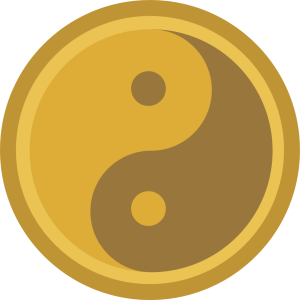
- Pivoting: Just like the tidal waves of breath in and out of your lungs, our physiology pivots from the expansive to a more contractive place. This is the dance of Yin and Yang as displayed in the Taiji symbol; it is the transition zone, the process of shifting from opening to closing.
Paying Attention
Noticing this opening and closing also helps us to establishes healthy boundaries around consenting to sexual activity. It is a practice, however, one that requires attention.
Sensuality is inherent to sexuality. In Chinese medicine, sex drive is derived from the functions of our sense organs, all of which are connected the organ systems and channels. By noticing what senses are more difficult for us to tune into, we can start to understand what organ systems might need more support. We can tend to those with an increased awareness around seasonal shifts, diet, and lifestyle practices as well as with support from any Chinese medicine practitioner.
Blocks to Sex
If there is cultural support, most children are able to verbalize their knowledge of gender identity by the age of 5. However, unhealthy beliefs are taught and enforced by multiple cultural structures including educational institutions, religious traditions, community or family members, and consumer marketing.
Many of us have been born into a society with a common cultural message of heteronormativity and monogamy. If you don’t naturally fall into these groups and find you have an aversion to or don’t enjoy sex, then you might be experiencing sexual repression. A good place to start is self-exploration on your romantic encounters since a young age. Are there any themes telling you that you don’t fit in to the stereotypical norm?
Types of Obstructions
Sex has the potential to create alchemical change, but obstructions to internal sexual alchemy are common. When the obstructions are physical, they can create numbness and pain. When the obstructions are emotional and spiritual, they can thwart experimentation, communication, and more intimate connection. While pornography is not inherently “bad” excessive viewing can be harmful. Moderation, as with anything, is advised. Obsessive exposure to sex or pornography desensitizes the Shen-Spirit to allow objectification of the ‘other’ and excessively stirs the Ministerial Fire, which is our healing life force that lives in the lower abdomen and supports healthy sexual activity.
Relationships & Attraction
It’s important to note that sexual attraction and desire for a relationship are two distinct states that do not always overlap. It’s important to distinguish these in your quest to figure out what your true sexual needs are, in comparison to your relational needs.
Ever wonder why you get so swept up in a new relationship, only later to find yourself in a similar pattern as before? While long-term relationships often bring up more deeply entrenched and nuanced communication challenges, new relationships have a unique dynamic to them. New relationship energy (NRE) is associated with the escalation of Fire, and though this element is associated with excitement and joy, in excess can cause a feeling of destabilization. The increase in fire also warms and softens the metal element, which allows for more mental flexibility during this time.
In a Chinese cosmological system called the Nine Palaces (九宫, Jiǔ Gōng), relationships are one of the 9 areas of self-development. The ideology defines relationships as our relationship to ourselves, others, and the cultivation of healthy internal abundance. From this lens, it’s necessary to be able to identify and address personal needs without self-criticism so that when a partner is chosen, it comes from this place of internal abundance and is not abusive or co-dependent. A Chinese medicine practitioner might work with this palace through the Protective Qi or the Metal & Earth elements if out of balance.
The Chinese Anatomy of Orgasm
Healthy arousal and orgasm has a regulating function for the body on so many levels. It regulates Jing-Qi-Shen metabolism, that is the transformation of our inborn potential to our highest purpose. It also regulates all of the primary channels, creating healthy flow of qi and blood that supports your vital organs, while also supporting the extraordinary vessels. These are the body’s reservoirs: where the overflow of what our bodies can’t process in the moment goes. If the primary channels are like the river beds of our bodies’, then the extraordinary vessels are like the oceans.
How Yin and Yang Come Into Play
The arousal phase is an expansive, Yang, process. The process begins with heat that stimulates and opens 3 of the extraordinary vessels to open along the spine. Pre-orgasm is the phase where the tides of Yin-Yang alternate; it is like the ebb and flow of a tide on the shore, building to the high-tide time of day.
Orgasm is a contractive, Yin, process that promotes fluid movement through the genitals (e.g. ejaculation). Orgasm is a process of overflow of this movement of fluid and qi from the extraordinary vessels to the primary channels. If there is not enough substance or energy available to overflow, orgasm can be difficult. That is, if someone is exhausted and not nourished, it might be challenging for that person to build arousal, let alone experience orgasm. During orgasm, movement of qi stagnation and pathological fluids can be expressed. This is one way that arousal and orgasm can be health-promoting activities.
When is Sex “Too Much”?
To determine the amount of sex that is “healthy,” focus on the state of your mental and physical health during engagement in these practices. In contemporary culture, excessive arousal combined with lack of sexual activity is a more common cause of disease than excessive sexual activity.
Sexual taxation can affect anyone. Just as sex has the potential for transformation of Jing, Qi and Shen, taxation can also occur on any one of these three levels and should be evaluated by a Chinese medical professional. Someone with Jing taxation might be more supported with physical rest and Kidney-nourishing herbs. QI taxation is more likely supported with mental-emotional rest and fresh air. Shen taxation requires more energetic nourishment with meditation or essential oils.
Special Cautions: Pregnancy, Menstruation, & More
- If you are menstruating, Chinese medicine advises against having sex. The direction of the menstrual flow is downward. Sexual activity often has an overall upward energetic signature. Therefore, Menstrual sex causes counterflow, which can lead to clots, cramps, and pain during, before, or after menstruation. It can also counterflow through the Bao Mai, the channel that connects the heart and the uterus, creating emotional upset. Learn more about menstruation from a Chinese Medical perspective here.
- Sex during pregnancy in moderation is recommended. While there are many special cautions including potential for infection, taxation, and sex that is too rough, you can also have too little sex. Pregnancy is a state of fullness; the pregnant person is effulgent with blood and resources to nourish both the mother and the growing baby. It can be healthy to mobilize and circulate these resources with sexual activity to promote pain reduction and prevent stagnation.
- Premature sex before menarche in assigned-female-at-birth (AFAB) individuals and before sexual maturity in assigned-male-at-birth individuals can damage the Extraordinary and Bao vessels, the earth element, the North-South axis, and the Heart-Kidney connection. This type of sex may also be complicated by trauma. It is advised to seek out support from a medical professional for support if this is part of your journey towards sexual health.
- Multi-orgasmic AFAB individuals can ‘force’ extraordinary vessel substances to move during sexual activity. This can cause extreme fatigue and dehydration after sex and can potentially cause sexual taxation in these individuals.
A healthy sex life begins with you, your relationship to your own body, and to the sensorial world. There are many ways to continue your journey in this arena. Consult a Chinese medical provider, journal, start having conversations around these topics, or take a class to begin practicing the tools shared here.
Meet the Author
 Miquella Young is a naturopathic doctor and licensed acupuncturist whose main goals are to dive into the deeper messages that lie beyond her patients’ pain, trouble sleeping, anxiety, or depression. She understands that many people may have the same diagnosis as each other, but maintains that the way they express that diagnosis is unique to them. Dr. Young focuses more on her patients’ unique expressions, habit patterns, and cycles of illness and health than the disease labels they have been given.
To schedule an appointment with Dr. Young, call 503-956-9396 or contact us now to schedule an appointment today.